 For candidates →

Hands-on projects
Career preferences crystallise around age 14. Six years before a candidate fills out your apprenticeship form, the decision between your sector and someone else’s has effectively been made — and your brand was probably nowhere in the room when it happened. Immersive Work Experience puts you there. Branded, virtual or in-person, AI-graded, ages 14+.
Most early-careers attraction effort lands at age 18–19 — UCAS clearing, university milkrounds, the careers fair circuit. By then, the candidate’s mental model of “jobs I might do” was set five years earlier, by which brands they encountered at school.
If you weren’t one of those brands, you’re competing on price for the candidates who already chose your sector elsewhere.
The downstream cost of an invisible-at-14 brand strategy compounds. The candidate pool that knows your sector exists is the candidate pool every other employer in your sector is also fighting for. That drives applicant cost-per-acquisition up, candidate quality (relative to spend) down, and diversity numbers nowhere — because the candidates who weren’t in your pool at 14 are still not in it at 21.
A brand that wasn’t there at year 9 is competing for second-choice candidates at year 13.
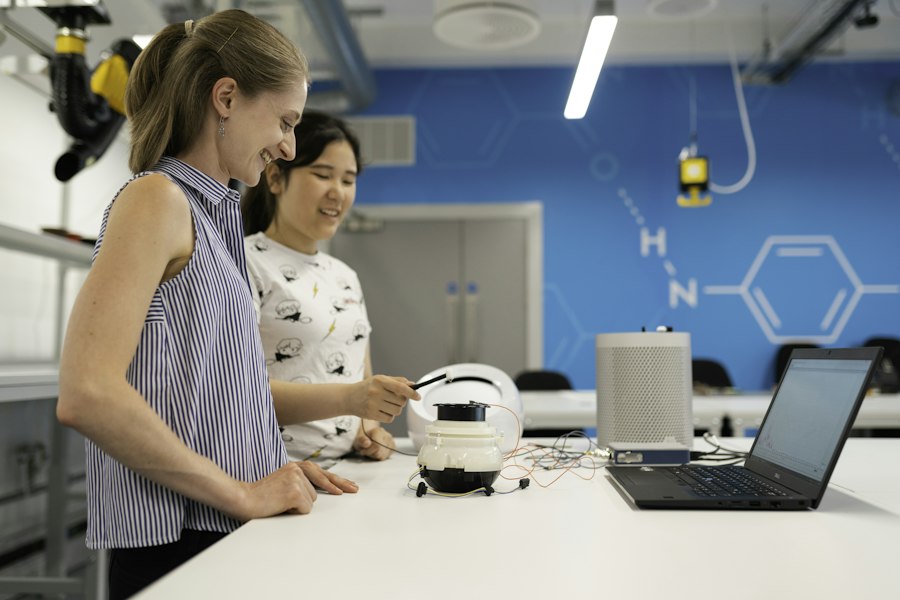
The fix is to be there at year 9. Not with a careers fair stand and a leaflet, but with structured work the candidate actually does — with their hands, on a real-feeling project, in your industry, with feedback. The signal it produces (motivation, engagement, learning agility, communication) feeds directly into the Assessment Platform when those candidates apply five years later. The brand association — this is what working at this employer is actually like — is what every brand-tracker survey is trying to manufacture, and rarely does.
The strongest IWX programmes feel practical: students make, test, discuss, review and explain. That is where employer brand becomes tangible, and where useful behavioural signal starts to appear.



 Featured · DHL UK
DHL’s UK Immersive Work Experience programme reached 38,000 students aged 14–18 across the 2025 cohort — logistics, distribution and supply-chain projects, branded throughout, AI-graded with feedback. The 19% completion rate beat the sector benchmark of 6% by three-fold. Of the candidates who later applied to DHL early-careers programmes, 41% cited the IWX experience as the reason they considered the sector at all.
IWX as a stand-alone is useful — you reach more young people, you build brand at year 9, you do something measurably good for social mobility. But its real leverage is as the front of a connected pipeline.
The behavioural signals we capture during IWX feed the Assessment Platform when those same candidates later apply. That’s why IWX-engaged candidates outperform CV-only candidates at hire by 1.6× on first-year performance.
Most clients start with a 60-minute design session: we walk through the IWX content libraries for your sector, show example programmes from comparable employers, and sketch what a year-one cohort would look like. No commitment; you walk away with a brief you could share with anyone.